Presenters
Source
🌐 The Agentic Era: Moving Beyond Standalone Chatbots to Unified Ecosystems
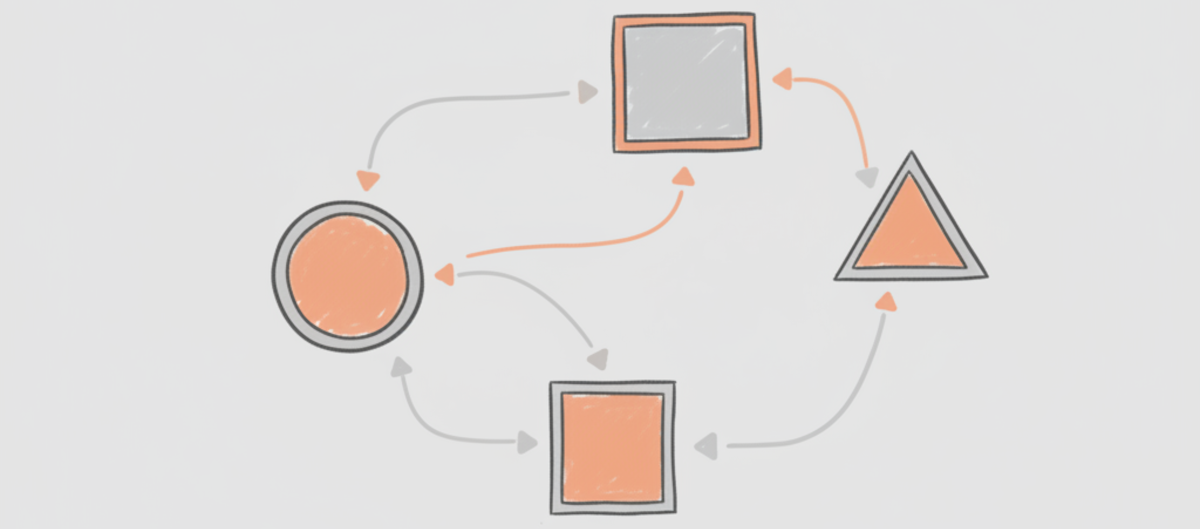
As we navigate 2026, the era of the isolated, static chatbot has officially ended. We are stepping into a future defined by unified AI ecosystems—a world where AI agents act not as siloed tools, but as interconnected nodes in a fluid, collaborative network.
Dhivya Dhayakar recently shared a roadmap for mastering this transition, emphasizing a critical balance: how do we harness autonomous action while maintaining robust human accountability?
🧩 The Problem: Tangled Cables and Cognitive Overhead
Currently, many enterprises suffer from the tangled cable problem. Business units build disparate agents that fail to communicate, leading to two major pitfalls:
- Rigid Solutions: Processes that break the moment a query becomes complex or a workflow changes.
- The Intelligence Tax: An unsustainable operational overhead where companies overuse massive Large Language Models (LLMs) for simple tasks, leading to high latency and premium costs.
🏗️ The Architecture: From Tools to Patterns
To solve these challenges, we must stop viewing AI as a simple tool and start building it as an architecture pattern. Dhayakar proposes a layered approach:
- Enterprise Tools (Base Layer): Foundational data and applications.
- Unified Orchestration (The Brain): The intelligence layer that interprets intent, decomposes goals, and routes tasks.
- User Experience (Top Layer): The interface through which users interact with the ecosystem.
The Six Pillars of Multi-Agent Ecosystems
- Intent Intelligence: Decomposes complex queries into actionable steps.
- Multi-Agent Orchestrator: The harness layer that manages task-specific agents.
- Specialized Agent Pool: Agents equipped with specific tools and knowledge.
- Tools & Skill Registry: A centralized catalog of enterprise capabilities.
- Adaptive Memory: Ensures context sharing, smooth handoffs, and state management.
- Human-in-the-Loop (HITL) Policy Gate: A vital safety protocol that pauses high-stakes actions for human review.
🚀 Orchestrating the Future: Workflow in Action
Consider employee onboarding. In the old world, a manager manually stitches together IT, HR, and finance tasks. In an agentic, intent-based model, the manager shifts from a manual coordinator to a strategic overseer.
The orchestration engine uses goal decomposition (via prompt chaining) and a reflection loop, where the reasoning engine critiques its own plan before executing. By utilizing an adaptive memory architecture—comprising session cards, experience stores (to remember successful paths), and RAG (Retrieval-Augmented Generation) for real-time facts—the system remains contextually accurate and highly agile.
💡 Key Takeaways for Enterprise Success
To build an effective agentic network, organizations must focus on these four pillars:
- Unify through Orchestration: Move away from fragmented point solutions to eliminate the tangled cable problem.
- Prioritize Reasoning over Training: Use semantic flexibility to handle real-world scenarios that rarely follow a predetermined path.
- Implement Human-First Governance: Use trajectory evals and immutable audit trails to ensure agents follow approved policy graphs, building trust and regulatory compliance.
- Eliminate the Intelligence Tax: Implement a smart router that applies a cost-logic fork—routing simple tasks to smaller, cheaper models and complex, ambiguous tasks to high-reasoning LLMs.
📈 The Roadmap to Maturity
Dhivya Dhayakar outlines a clear four-phase evolution:
- Phase 1 (Foundational): Simple agents grounded in enterprise data.
- Phase 2 (Orchestration): Introducing the agent registry and harness.
- Phase 3 (Accountability): Integrating high-stakes actions with human-in-the-loop checkpoints.
- Phase 4 (Scale & Govern): Continuous evaluation of agent trajectories to prevent rogue behavior.
The bottom line? It is time to stop building isolated bots and start architecting governed, multi-agent systems. By building a cost-aware, self-correcting harness, enterprises can finally drive real ROI rather than accumulating technical debt. 🦾✨